AI Game Concept Art Workflow 2026: Midjourney, Stable Diffusion, Leonardo AI, Krea, and Magnific From Brief to Art Bible
Last updated: 2026-07-21 · AI image generation tools
A beautiful AI image can be a terrible game asset. It may sell a mood in a pitch deck, yet fail the moment an artist needs the same character from the side, a prop at gameplay scale, a readable silhouette against a dark level, or a texture that fits the engine budget. That gap is why an AI game concept art workflow needs more than prompts. It needs an art brief, controlled references, revision rules, human drawing decisions, and a record of what can safely move into production.
This guide is for art directors, concept artists, indie developers, narrative designers, producers, technical artists, and small studios building a visual language before full production. We compare Midjourney for fast mood exploration, Leonardo AI for game-oriented asset ideation and canvas work, Stable Diffusion for local control and repeatable node-based pipelines, Krea AI for live visual iteration, and Magnific AI for careful enhancement. No single tool owns the final art direction.
At the findaiverse curation desk, we treat generated pictures as disposable visual hypotheses until a named artist can explain the design, redraw the important forms, and reproduce the result under a fixed brief. That standard sounds strict. It also stops a team from approving a cinematic close-up that cannot become a model sheet, animation rig, environment kit, user interface icon, or legally documented production asset.
- Write constraints before prompts — camera, silhouette, materials, culture, gameplay function, age rating, and technical limits belong in the brief.
- Explore broadly, approve narrowly — generated contact sheets are useful for finding directions; production should proceed from a small, redrawn set.
- Test identity across views — a character is not approved until front, side, back, expression, pose, costume, and scale checks agree.
- Keep provenance beside the asset — record the tool, model, date, references, prompt, settings, edits, reviewer, and intended rights status.
- Measure editability, not beauty — the best concept is the one your team can explain, revise, animate, build, and ship.
Turn game design into a visual constraint brief
Start with the player’s job. A swamp ranger in a narrative illustration can disappear into mist and still look wonderful. The same ranger in an isometric tactics game needs a silhouette that survives a small camera, clear team colors, readable equipment, and animation-friendly joints. Concept art serves the game, so the brief should begin with camera distance, play mode, platform, target frame, interaction, and the decision the image must support.
Write a one-page visual constraint brief before opening an image generator. Include the project’s emotional promise, setting, period, technology level, cultural sources, shape language, color hierarchy, material vocabulary, lighting rule, forbidden motifs, age-rating boundary, and technical destination. Add the asset type: mood painting, character direction, prop family, environment module, creature study, interface motif, key art, or texture reference. Mixing those jobs in one prompt produces pictures that nobody can evaluate fairly.
A useful character brief contains more than appearance. State role, physical action, social status, climate, carried weight, movement speed, damage exposure, customization needs, and relationship to other silhouettes. “Veteran courier” is weak. “A fast mountain courier who climbs with both hands, carries fragile medicine, reads as friendly at thirty screen pixels, and never resembles a soldier” gives the artist decisions to solve.
Environment briefs should name traversal and repetition. Where can the player walk? Which surfaces can repeat as modules? What marks a safe path, a hazard, a locked route, and an interactable object? Generated environments often hide impossible architecture behind atmosphere. Ask for a plan, elevation, entrance logic, scale figures, and material transitions rather than approving one dramatic angle.
Separate references into fact, function, and feeling. Fact references document clothing construction, tools, plants, buildings, weather, or historical details. Function references show how a hinge, pack, weapon, doorway, or machine works. Feeling references communicate rhythm, palette, density, and emotional temperature. Label them. If a mood image becomes an engineering reference by accident, production artists inherit fiction as fact.
Write negative constraints in plain language. Do not copy a living artist’s name into the prompt. Do not reproduce a competitor’s signature costume, faction mark, creature anatomy, or user-interface frame. Avoid protected logos, identifiable actors, unlicensed franchise characters, and reference images the project has no right to upload. “No capes” is also a production constraint if cloth simulation is outside scope.
Define approval evidence. A mood direction might need a palette strip, five material samples, and three environment thumbnails. A character direction might need a silhouette sheet, turnaround, face sheet, prop callouts, and one gameplay-scale test. If the team cannot name the evidence, it will approve whatever image creates the strongest first reaction.
The findaiverse Image Generation hub is a good place to see candidate tools, but your brief decides which capability matters. Tool selection comes second.
Compare Midjourney, Leonardo AI, Stable Diffusion, Krea, and Magnific by job
| Concept-art job | Good starting tool | Useful output | Human check before approval |
|---|---|---|---|
| Fast mood, shape, lighting, and genre exploration | Midjourney | Contact sheets, atmosphere options, palette families, composition leads. | Originality, reference influence, anatomy, camera logic, gameplay readability. |
| Game assets, character directions, editing, and model training experiments | Leonardo AI | Style studies, asset families, canvas edits, sketch-guided variants. | Training rights, identity drift, usable topology assumptions, file provenance. |
| Local, controlled, repeatable image pipelines | Stable Diffusion | Seeded batches, ControlNet structure, inpainting, custom workflow graphs. | Model and LoRA licenses, security, reproducibility, operator skill, hidden dependencies. |
| Live sketch conversation and composition search | Krea AI | Rapid visual feedback, shape adjustments, reference-guided exploration. | Whether the chosen direction survives a deliberate redraw and fixed view. |
| Final-size test and careful detail enhancement | Magnific AI | Large review images, texture suggestions, print or pitch enlargement. | Invented detail, changed symbols, altered faces, false materials, production mismatch. |
Midjourney is useful near the wide end of exploration. It can reveal an unexpected palette, silhouette, surface language, or composition quickly. That speed is a reason to generate smaller contact sheets, not a reason to approve the first polished frame. Hide tool names during review, reduce every candidate to thumbnail size, and ask which direction answers the brief. A visually rich image that ignores gameplay should lose.
Leonardo AI fits teams that want image generation beside editing and game-oriented visual work. Its canvas and model options can support iteration around characters, environments, props, and textures. Treat custom training as a separate rights decision. A private model does not repair an unlicensed training set, and technical consistency does not prove that the underlying design is original.
Stable Diffusion has a different appeal: teams can run open-weight models locally and construct repeatable flows with image-to-image, inpainting, LoRA, and structural controls such as ControlNet. That control helps when a technical artist can own the graph, model versions, dependencies, and output log. The cost is operational. A graph nobody else can reproduce is not a studio pipeline; it is one person’s workstation ritual.
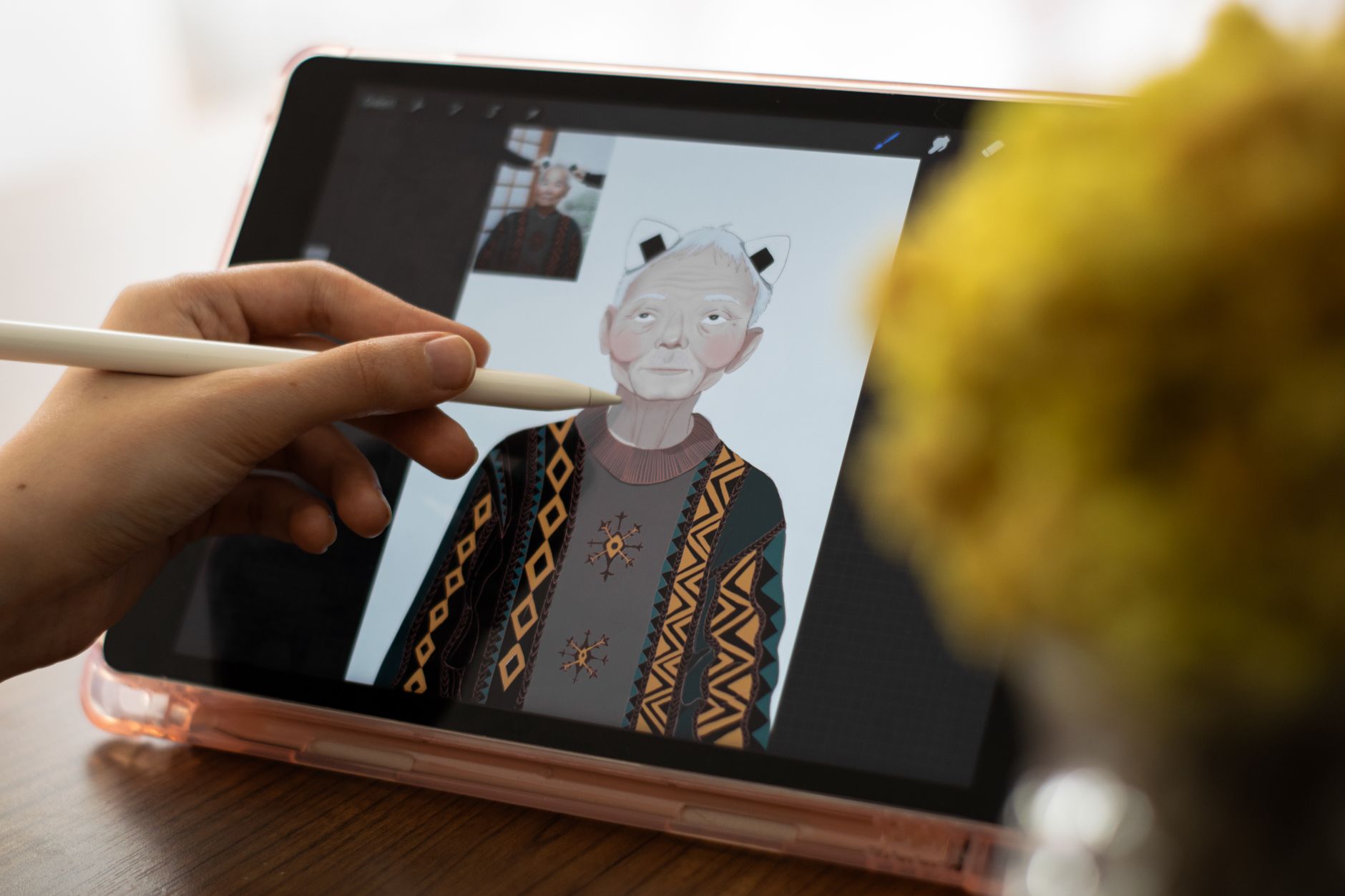
Krea’s live canvas is valuable when the artist wants to steer shape and composition continuously instead of writing ever-longer prompts. Rough drawing remains important because it gives the artist a direct way to say “this mass belongs here.” Save the sketch, not only the generated result. The sketch proves what the artist contributed and makes later correction easier.
Magnific AI belongs late, if at all. Generative enhancement can make a small concept easier to inspect or present, but it can also invent buckles, pores, inscriptions, material grain, and tiny mechanical details. Compare the enlarged result beside the source at fixed zoom. Mark every changed region. Never let an upscaled picture silently become the specification a modeler must follow.
Other tools can fill narrower jobs. Adobe Firefly is worth testing when the team already edits in Adobe applications and needs a documented commercial workflow. DALL-E can be convenient for conversational exploration. Ideogram is a candidate when title cards or readable typography are part of a pitch image. Keep generated lettering out of final interface assets until a designer rebuilds it as real text.
Build a controlled AI game concept art exploration funnel
Exploration works best as a funnel with named stages. Stage one is black-and-white silhouette. Stage two tests proportion and shape rhythm. Stage three adds palette and material. Stage four tests camera and gameplay scale. Stage five examines identity across views. Stage six produces a redrawn selection. Jumping straight to a finished cinematic illustration makes color, light, costume, anatomy, and rendering quality compete for attention.
Begin with human thumbnails. Ten sixty-second drawings can expose better structural questions than ten paragraphs of prompt adjectives. Feed selected shapes into a permitted image-to-image or live-canvas workflow, then compare what changed. If the model repeatedly pulls the design toward familiar fantasy armor, generic anime faces, or film-poster lighting, write those pulls into the negative constraints.
Keep one variable per batch. Change silhouette while holding camera and palette. Change material while holding shape. Change faction language while holding function. If every prompt changes subject, lens, light, era, medium, costume, and background, the team cannot tell why one candidate worked. Controlled batches also make cost and reviewer time visible.
Use a prompt record with stable fields: subject, gameplay function, shape, proportion, construction, material, wear, palette, light, camera, background, must-keep element, forbidden element, reference IDs, model, version, seed where available, and operator. Natural language is fine. Consistent fields matter more than ornate prose.
Review without the prompt first. Ask each reviewer to write what the image communicates: role, faction, threat, mobility, climate, era, and likely gameplay function. Then reveal the brief. A mismatch is evidence. Do not rescue the image by explaining what the prompt intended; players will not see the prompt.
Score candidates on five axes from zero to four: brief fit, silhouette readability, originality distance, reproducibility, and production usefulness. A perfect render with weak reproducibility should not pass. Add a red flag rather than a number for protected marks, close resemblance to a known character, cultural misuse, impossible function, or references with uncertain rights.
Run the gameplay-scale test early. Put character silhouettes at actual on-screen size over representative backgrounds. Place props beside a hand and a doorway. Put architecture behind the expected camera. Convert an item to grayscale. Blur the frame. Mirror it. These plain tests expose hierarchy problems that disappear in a full-resolution beauty image.
End exploration with a written selection note. Name what is approved and what is not. “Approve the triangular pack, low center of gravity, blue route marker, and layered rain shell; reject the face, hand detail, weapon, background settlement, and all generated lettering.” That sentence stops downstream artists from treating every pixel as direction.
Make characters, props, and environments reproducible
Character consistency begins with design logic, not a face reference. Write a shape grammar: two dominant masses, one repeated angle, one asymmetry, a material hierarchy, and a rule for detail density. Explain why each element exists. A courier’s left shoulder may carry a weather shield because the pack opens on that side. That reason helps an artist reconstruct the design from a new angle.
Build a minimum character packet: front, three-quarter, side, back, neutral face, expression row, hand and footwear study, primary pose, movement silhouette, costume layers, equipment callout, height comparison, and color swatches. Generated views can suggest options, but an artist must reconcile seams, straps, pockets, hair, anatomy, and equipment attachment. If the back view invents a second closure system, the packet is not consistent.
Use reference controls cautiously. A character reference can preserve face and costume cues while freezing accidental artifacts. A LoRA can repeat a visual identity while also memorizing unwanted poses, lighting, or line habits. Keep a clean, rights-cleared training set. Separate identity images from pose and composition controls. Test with prompts far outside the training examples to see what the model actually learned.
Props need function sheets. Show closed, open, held, stored, damaged, and repaired states. Mark moving parts, grip, scale, attachment, material, weight cue, and interaction zone. Generated designs often add decorative hinges that cannot move or handles too small for the character. A quick cardboard mock-up or 3D blockout can answer those questions better than another generation batch.
Environment consistency depends on kits. Define wall bays, corners, doors, windows, floors, trims, roofs, supports, signs, lights, clutter, and damage states. Ask concept images to explore combinations from the kit rather than endless unique buildings. Production cost falls when the visual identity comes from repeatable relationships instead of one-off ornament.
Keep a scale bible. Put the player, common door, vehicle, prop, enemy, stair, cover height, and landmark on one sheet. AI images can make a gate look monumental in one frame and domestic in another. Scale bars and familiar objects provide an external check. So does a gray 3D blockout under the real game camera.
Color needs a system too. Assign gameplay meaning before decorative variation: ally, enemy, interactable, hazard, objective, neutral background, rare reward. Test common color-vision deficiencies and low-brightness displays. The Game Accessibility Guidelines offer practical starting points for visual communication. Generated beauty art should not consume colors the interface needs for play.
Approve style through counterexamples. An art bible should show what “too ornate,” “too modern,” “too cute,” “too dark,” and “too realistic” mean for this project. Generated near-misses can make useful negative examples if their provenance remains attached. A wall of only perfect hero images leaves new team members guessing at the boundaries.
Move from selected concept to production handoff
The handoff begins with a redraw. An employed or contracted artist should reconstruct the selected direction in editable layers, remove unexplained artifacts, resolve perspective, and apply the project’s shape and material rules. This is not cleanup around the edges. It converts a probabilistic picture into an intentional design with accountable decisions.
Split the source file by decision: construction, value, color, material, decals, effects, and notes. Keep text as text. Keep logos and faction marks as vector assets. Keep front, side, and back aligned. Name layers and mark uncertain areas. A flattened generated JPEG may inspire the work, but it cannot serve as the only production source.
Modelers need callouts, not adjectives. Replace “ancient ceramic metal” with cross-sections, joints, thickness, wear zones, roughness examples, and a small material board. Animators need range of motion and collision concerns. VFX artists need emission behavior and timing. Audio teams may need the implied material and mechanism. Every discipline asks a different question of the same design.
Run a blockout gate before high-detail modeling. Test camera, proportion, navigation, reach, silhouette, occlusion, attachment points, and animation. If the blockout fails, return to the concept’s structure rather than asking an enhancer to make the image look more convincing. Detail does not repair bad massing.
Create an asset acceptance checklist. It can include editable source, approved dimensions, consistent views, real-world or fictional construction logic, gameplay-scale capture, color-accessibility check, reference rights, prompt and model log, reviewer, date, and known deviations. Keep the checklist with the task, not in a forgotten policy document.
Track generation cost and review cost separately. Cheap images can create expensive selection meetings. Record the number of batches, candidates reviewed, artist redraw hours, rights review, and downstream revisions. The useful metric is not images per minute. It is approved, buildable direction per artist-day.
Give every approved design a change owner. If narrative changes the character’s role, art direction should decide which parts of the visual logic change. If design changes a tool into a weapon, gameplay and age-rating checks return. Generated variants make change look cheap, but every approved change travels through modeling, animation, effects, interface, marketing, testing, and localization.
Archive rejected directions with reason codes. “Wrong gameplay read,” “too close to franchise reference,” “cannot reproduce across views,” “material logic failed,” and “outside technical scope” are more useful than “didn’t like it.” The archive trains human judgment and keeps the studio from repeating old mistakes.

Handle rights, references, provenance, and disclosure
Rights review has several layers. Check the generator’s current terms for the exact account and plan. Check the model or checkpoint license. Check every uploaded reference. Check commissioned art and employee agreements. Check whether a logo, character, costume, building, product, or person in the output creates a separate concern. Permission to use a tool is not a promise that every output is clear.
The U.S. Copyright Office AI initiative publishes reports and guidance material on copyright and artificial intelligence. Its analysis distinguishes human-authored expression from material generated by a machine. Studios should obtain legal advice for their jurisdiction and deal structure rather than treating a blog summary as a rights opinion.
Human authorship should be visible in the working record. Save the artist’s thumbnails, paintovers, masks, selections, redraws, 3D blockouts, compositing decisions, typography, and written rationale. Do not manufacture a history after the fact. A genuine process record helps production, attribution, and later explanation even when no dispute appears.
Reference packs need a source ledger. Record creator, URL or repository, acquisition date, license, permitted use, project permission, and who approved it. Separate “view-only inspiration” from material allowed for upload or transformation. Client concept art, unreleased screenshots, employee faces, and licensed stock may have restrictions that a public generator cannot honor by guesswork.
Provenance metadata can help recipients understand how an asset changed. The C2PA specifications describe a technical standard for content provenance. Such credentials are evidence about recorded origin and edits, not proof that an image is true, lawful, original, or good. Keep the studio’s own ledger even when a tool attaches credentials.
Decide disclosure by destination. Internal ideation may need only the asset log. Investor decks, crowdfunding pages, storefront key art, competition entries, platform submissions, publisher milestones, and client work may have different disclosure or eligibility rules. Ask before the deadline. Replacing a disputed hero image one day before launch is not a rights strategy.
Protect people and cultures. Do not clone a performer, employee, voice actor, cosplayer, or community member into character art without clear permission. When a faction draws from a living culture, include qualified cultural review and primary references. A generator can combine sacred, ceremonial, everyday, and fictional elements without understanding their boundaries.
Set a deletion and access rule. Concept packs can reveal unreleased characters, plot, business plans, or licensed material. Know whether the tool stores prompts and images, whether galleries are public, who controls the account, how team members leave, and how data is deleted. For sensitive work, a reviewed local Stable Diffusion setup may offer more control, but local deployment still needs security, license, and model-supply checks.
Field notes from the findaiverse curation desk
While organizing the 121-tool findaiverse directory, we noticed that image products are often compared by final-picture quality even when they solve different parts of the job. A live canvas, a local diffusion graph, a polished prompt generator, an editing suite, and a generative upscaler can all produce an image. They do not create the same evidence, controls, or handoff.
Our first review question is “What remains editable?” If the answer is only a prompt and a flattened image, the team has limited control. Sketches, masks, seeds, node graphs, model IDs, layers, callouts, and paintovers turn a lucky result into a process another artist can inspect.
The second question is “What did the tool invent?” Upscaling is the clearest example. A detail enhancer can add plausible material that never existed in the source. The same issue appears in turnarounds: a new angle may invent straps, scars, pockets, and symbols. Mark invention as invention. Do not let resolution impersonate certainty.
Third, we test at the destination size. A character portrait can look distinct at 2,000 pixels and generic at 40. A prop can look functional until placed in a hand. An environment can feel vast until the player capsule enters the blockout. Destination tests beat aesthetic arguments.
Fourth, we prefer selection systems over prompt folklore. A clear brief, fixed batch, blind review, scorecard, and redraw gate teach the team more than collecting “magic words.” Model behavior changes. The studio’s visual reasoning should survive a model update or vendor switch.
Fifth, a smaller approved set is healthier than a vast inspiration folder. Hundreds of unrelated images create false optionality. Choose a direction, write why, define what remains open, and remove rejected frames from the active board. Constraint gives artists something to build against.
For a first trial, choose one side character, one hand-held prop, and one small environment kit. Use two tools from the AI image generation category. Measure setup, generation, review, redraw, blockout, and revision time. Do not begin with the hero character or key art.
Disclosure: findaiverse lists free and paid AI products, and this article is editorial guidance rather than sponsored placement. Features, plans, licenses, model availability, and data rules can change. Check current vendor documents and obtain professional advice for rights-sensitive production. Browse the findaiverse AI tools directory for candidates, then test them on your own brief.
Frequently asked questions
What is an AI game concept art workflow?
An AI game concept art workflow is a documented process that uses image-generation or enhancement tools during visual exploration while keeping human artists responsible for the brief, selection, redraw, consistency, rights review, and production handoff. It treats generated pictures as candidates, records provenance, and approves only designs that can be reproduced and built.
Which AI image generator is best for game concept art?
There is no single winner. Midjourney is a strong candidate for fast visual exploration, Leonardo AI offers game-oriented creation and editing options, Stable Diffusion suits teams that need local and repeatable control, Krea supports live sketch iteration, and Magnific can test enhanced detail. Choose by workflow evidence, not one favorite image.
Can an indie studio ship AI-generated concept art directly?
It can use an output only when the tool terms, model license, references, platform rules, client or publisher agreement, and applicable law permit the use. Direct shipping also creates quality problems: flattened images may contain inconsistent design and invented detail. A human redraw, source record, and rights review are safer production gates.
How do you keep an AI-generated character consistent?
Define a shape grammar and functional design, create rights-cleared reference material, separate identity from pose controls, generate controlled batches, and reconcile every view in a human-authored model sheet. Test the character at gameplay size and in motion. Reference features can help, but they do not replace an intentional turnaround.
Final recommendation
Pick a minor asset and write the brief before you subscribe to another generator. Produce silhouettes, run two controlled tool tests, review at gameplay size, and require a human redraw plus one gray 3D blockout. Then compare total review and revision time. The best AI game concept art workflow is not the one that creates the most dramatic gallery. It is the one that turns a visual idea into a clear, original, rights-aware design your team can still explain six months later. Start with the findaiverse Image Generation hub, keep the experiment narrow, and make editability the gate.