
Hugging Face
Hugging Face is the world's largest open-source AI platform, hosting 500K+ models, datasets, and Spaces — the central hub for the global machine learning community.
Hugging Face has established itself as the de facto GitHub of artificial intelligence — a platform where researchers, engineers, and organizations share, discover, and collaborate on AI models and datasets at unprecedented scale. With over 500,000 public models and hundreds of thousands of datasets, the Hugging Face Hub is the single largest repository of open-source machine learning assets in the world.
At the foundation of Hugging Face's ecosystem is the Transformers library, which has accumulated over 100,000 GitHub stars and become the standard framework for working with transformer-based models across natural language processing, computer vision, and audio tasks. The library provides a unified API to download, fine-tune, and deploy state-of-the-art models from any architecture — BERT, GPT, T5, CLIP, Whisper, Stable Diffusion, and thousands more — with just a few lines of Python code.
Hugging Face Spaces allows anyone to build and deploy interactive AI demos and web applications, powered by Gradio or Streamlit, directly on the platform. Researchers use Spaces to showcase their papers, developers build prototype tools, and companies demonstrate capabilities — all without managing infrastructure. Spaces can run on free shared CPUs or be upgraded to dedicated GPUs for compute-intensive applications.
The platform's Inference API enables developers to query hosted models via HTTP requests without downloading weights locally — ideal for rapid prototyping and production integrations. AutoTrain provides a no-code interface for fine-tuning models on custom datasets, democratizing the ability to create specialized AI models without deep machine learning expertise. The Hugging Face Hub also supports versioning, branching, and collaborative workflows similar to Git, making it easy to manage model iterations and dataset versions.
Hugging Face's community has grown to become one of the most influential in AI. Google, Meta, Microsoft, Amazon, and virtually every major AI lab publish their models on the platform. The community contributes model cards documenting capabilities and limitations, dataset datasheets, and evaluation benchmarks — building a culture of responsible and transparent AI development. For any developer, researcher, or organization working with AI, Hugging Face is an indispensable resource.
Key Features
- Model Hub with 500K+ open-source models spanning NLP, vision, audio, and multimodal tasks — searchable and filterable by task and framework
- Transformers library with 100K+ GitHub stars providing a unified API for BERT, GPT, T5, Llama, Stable Diffusion, and thousands more
- Hugging Face Spaces for building and sharing interactive AI demos and web apps with Gradio or Streamlit — no infrastructure required
- Inference API to query hosted models via simple HTTP requests without downloading model weights locally
- AutoTrain no-code platform for fine-tuning models on custom datasets without machine learning expertise
- Datasets library with 100K+ open datasets for training, evaluation, and research across all AI domains
- Git-based versioning, branching, and collaboration workflows for models and datasets via the Hub
- Model cards and dataset cards documenting capabilities, limitations, and responsible use guidelines
- Enterprise Hub with SSO, audit logs, private model repositories, and dedicated infrastructure for organizations
- Accelerate, PEFT, and TRL libraries for efficient model training, parameter-efficient fine-tuning, and reinforcement learning from human feedback
Frequently Asked Questions
Is Hugging Face free to use?
Yes, the core Hugging Face platform is free with a generous free tier. You get access to the full model hub, datasets, Spaces on shared CPU, and the Inference API with usage limits. The Pro plan at $9/month unlocks benefits like faster Inference API, more Spaces hardware options, and early access to new features. Enterprise plans with custom pricing offer private infrastructure, SSO, compliance features, and dedicated support for organizations.
What is the Transformers library and why is it important?
The Hugging Face Transformers library is a Python package that provides a standardized interface to download, use, and fine-tune thousands of pre-trained AI models. With over 100,000 GitHub stars, it has become the most widely used deep learning library in the research and production community. It abstracts away the complexity of model architectures, letting you load models for tasks like text classification, translation, summarization, image generation, and speech recognition in just a few lines of code.
Can I run models locally or only through the API?
Both options are available. You can download any model from the Hub and run it entirely locally using the Transformers library — ideal for privacy-sensitive applications or when you need offline access. Alternatively, the Inference API lets you query models hosted on Hugging Face's servers without any local setup. For production workloads, Inference Endpoints offers dedicated, scalable infrastructure to deploy specific models on demand.
Who uses Hugging Face in production?
Hugging Face is used by organizations of all sizes — from individual researchers and startups to the world's largest technology companies. Google, Meta, Microsoft, Amazon, Salesforce, and thousands of enterprises have published models on the platform. Startups use it to prototype and deploy AI features quickly. Research institutions rely on it to share paper artifacts. It's considered the standard distribution channel for open-source AI models globally.
What is AutoTrain and how does it work?
AutoTrain is Hugging Face's no-code fine-tuning platform that allows you to train custom AI models on your own data without writing any code. You upload a labeled dataset, select the task type (text classification, summarization, image classification, etc.), choose a base model, and AutoTrain handles the entire training pipeline — data preprocessing, training, evaluation, and model upload to the Hub. It's designed for teams that need custom models but don't have dedicated ML engineering resources.
Alternative Tools
Other Productivity tools you might like

Beautiful.ai
ProductivityAI-powered presentation tool with smart auto-design and layout intelligence

AutoGPT
ProductivityAutoGPT is a pioneering open-source autonomous AI agent framework that lets you assign a high-level goal and watches it autonomously plan, research, write code, browse the web, and execute tasks until the objective is complete.

Calendly AI
ProductivityAI scheduling platform that automates meeting booking with shareable calendar links.

ChatPDF
ProductivityAI tool that lets you chat with any PDF document, asking questions and getting instant answers with citations from research papers, contracts, textbooks, and more.

ClickUp AI
ProductivityClickUp AI is an all-in-one project management platform with built-in AI that writes, summarizes, generates action items, and automates work across tasks, docs, whiteboards, and goals.

Clockwise
ProductivityAI calendar optimization that protects Focus Time and reduces meeting overload
Tags
Related Guides
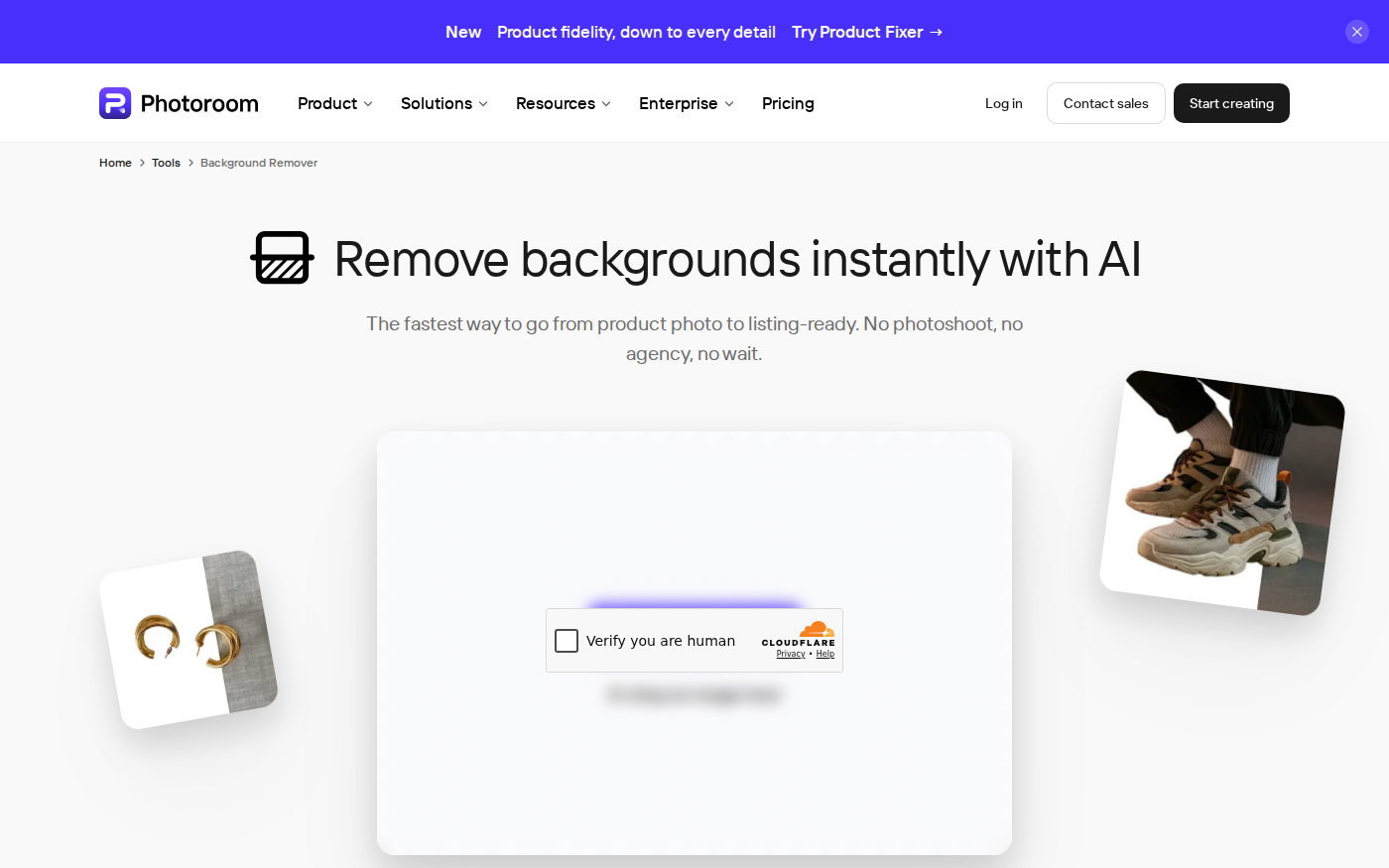
PhotoRoom vs Pixlr: Which Is Better for Product Photos?
Last checked: September 4, 2026 · Category: AI image tools PhotoRoom is the more direct choice for turning product photos into consistent marketplace images; Pixlr is the more flexible choice when…
CapCut vs Descript: Which Editor Fits Talking-Head Videos?
Last checked: August 28, 2026 · Category: AI video tools CapCut and Descript can both turn a talking-head recording into a captioned video, but they make different parts of the edit feel primary.…
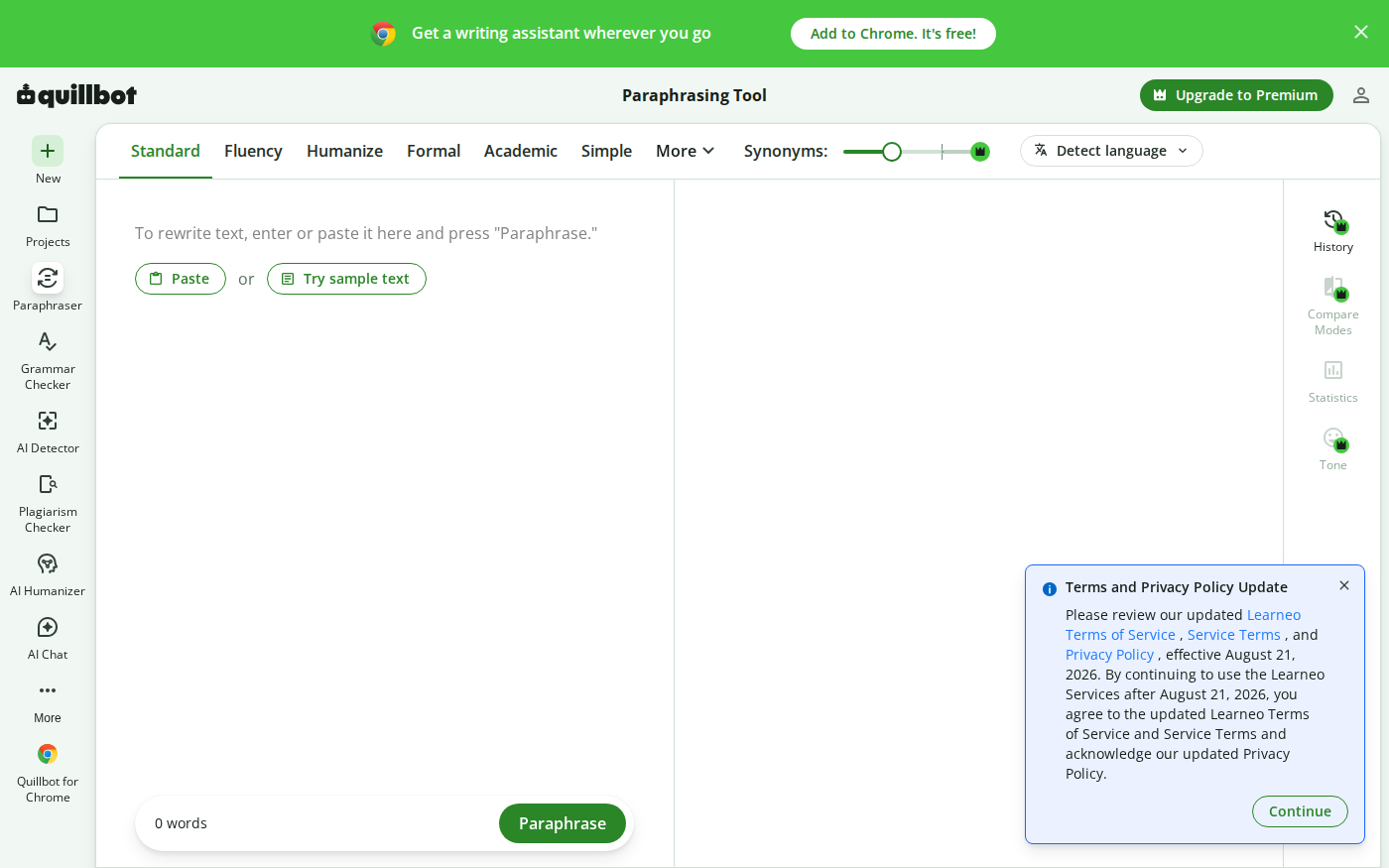
Wordtune vs QuillBot: Which Rewriter Gives You More for Free?
Last checked: August 21, 2026 · Category: AI text-generation tools Wordtune and QuillBot can both rewrite an awkward sentence, but their free plans place the limit in different places.…
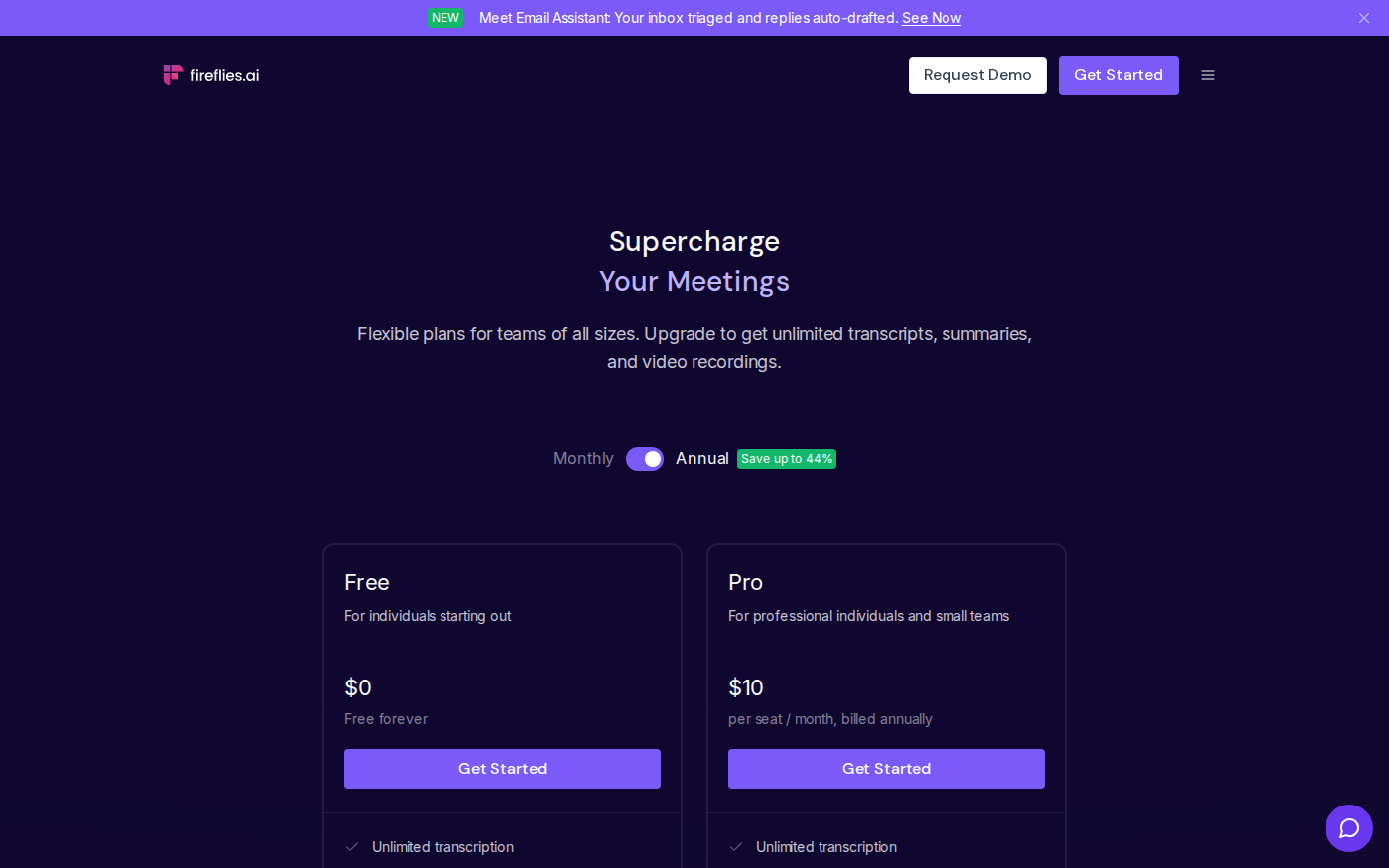
Otter vs Fireflies: Which Meeting Assistant Fits Your Team?
Last checked: August 14, 2026 · Category: AI productivity tools Otter and Fireflies solve the same basic problem, but their pricing meters and strongest use cases are different.…