
DeepSeek
DeepSeek is a cutting-edge Chinese AI lab offering free access to DeepSeek-V3 and DeepSeek-R1, open-source models that rival GPT-4 with exceptional coding, math, and chain-of-thought reasoning capabilities.
DeepSeek is a Chinese artificial intelligence research laboratory that has taken the global AI community by storm with the release of its flagship models, DeepSeek-V3 and DeepSeek-R1. Founded with a mission to push the frontiers of artificial general intelligence, DeepSeek has established itself as one of the most formidable players in the open-source AI space, delivering performance that rivals and in some benchmarks surpasses models from OpenAI, Anthropic, and Google—at a fraction of the cost.
DeepSeek-V3 is a dense large language model trained on an enormous multilingual corpus, demonstrating state-of-the-art performance across coding, mathematics, logical reasoning, and natural language understanding. Its architecture incorporates innovative training techniques that allow it to achieve GPT-4-class performance while remaining highly cost-efficient. DeepSeek-V3 excels at following complex multi-step instructions, generating production-quality code across dozens of programming languages, and handling nuanced analytical tasks that require sustained reasoning.
DeepSeek-R1 takes performance a step further by introducing a specialized chain-of-thought reasoning paradigm. Inspired by OpenAI's o1 model, R1 is trained to think through problems explicitly before generating an answer—working through intermediate steps, checking its own logic, and refining its conclusions. This makes R1 particularly powerful for mathematics olympiad problems, algorithmic challenges, formal logic, and any domain where systematic step-by-step reasoning produces better outcomes than direct pattern matching.
One of DeepSeek's most significant contributions to the AI ecosystem is its commitment to open-source development. The model weights for DeepSeek-V3 and R1 are publicly released, allowing researchers, developers, and businesses worldwide to fine-tune, deploy, and build on top of these models without licensing restrictions. This openness has led to a thriving community of derivative models, benchmarks, and integrations across the AI ecosystem.
DeepSeek is accessible for free via its official web chat interface at chat.deepseek.com, providing a clean conversational UI that supports long-context conversations, code rendering with syntax highlighting, and markdown formatting. The interface is designed for productivity—power users appreciate the lack of friction in switching between the base V3 model and the R1 reasoning model for different task types. DeepSeek also provides API access, making it straightforward to integrate into existing workflows, applications, and development pipelines at extremely competitive pricing compared to other frontier model providers.
Key Features
- DeepSeek-R1 chain-of-thought reasoning model that thinks step-by-step for complex math, logic, and coding problems
- DeepSeek-V3 general-purpose model with GPT-4-class performance across writing, analysis, and instruction following
- Exceptional code generation and debugging across Python, JavaScript, C++, Rust, SQL, and 30+ programming languages
- Advanced mathematical reasoning including calculus, linear algebra, combinatorics, and competition-level problems
- Open-source model weights publicly available for self-hosting, fine-tuning, and commercial deployment
- Long-context conversation support for analyzing large documents, codebases, and multi-step workflows
- Multilingual capabilities with strong support for Chinese, English, Japanese, Korean, and major world languages
- Free web chat access with no subscription required via chat.deepseek.com
- API access for developers with highly competitive pricing compared to other frontier model providers
- Transparent reasoning display — R1 shows its full thought process, making it easier to verify and audit complex outputs
Frequently Asked Questions
Is DeepSeek completely free to use?
Yes, DeepSeek offers free access to both DeepSeek-V3 and DeepSeek-R1 through its web chat interface at chat.deepseek.com with no subscription required. You can use the service without creating an account for basic queries, or register for a free account to access additional features and longer conversation history. For developers, the DeepSeek API is also available at very competitive rates—significantly cheaper than comparable frontier models from other providers.
What is the difference between DeepSeek-V3 and DeepSeek-R1?
DeepSeek-V3 is a general-purpose large language model optimized for a wide range of tasks including writing, coding, analysis, and conversation. It delivers fast responses and excels at following complex instructions. DeepSeek-R1, on the other hand, is a reasoning-focused model that uses chain-of-thought (CoT) methodology—it works through problems step by step, showing its reasoning process before arriving at a conclusion. R1 is particularly suited for mathematics, logic puzzles, and algorithmic challenges where systematic reasoning yields better results than direct pattern matching.
How does DeepSeek compare to ChatGPT and Claude?
DeepSeek's models—particularly DeepSeek-V3 and R1—perform competitively with GPT-4o and Claude 3.5 on many standard benchmarks including coding (HumanEval, SWE-bench), mathematics (MATH, AIME), and reasoning tasks. DeepSeek R1 in particular scores near the top on competition-level math benchmarks. The key differentiators are DeepSeek's open-source availability, its cost efficiency, and its exceptional performance on code generation. ChatGPT and Claude may have advantages in conversational fluency, instruction diversity, and multimodal capabilities.
Can I use DeepSeek for coding and software development?
Absolutely. Code generation is one of DeepSeek's strongest capabilities. Both V3 and R1 produce high-quality code in Python, JavaScript, TypeScript, Go, Rust, C/C++, Java, SQL, and many other languages. DeepSeek can write entire functions or modules from a natural language description, debug existing code by analyzing error messages and stack traces, explain unfamiliar codebases, optimize code for performance, and write unit tests. Many developers report that DeepSeek rivals or outperforms competing models on real-world coding tasks.
Is DeepSeek safe to use? What about data privacy?
DeepSeek is a product of a Chinese AI research company, and users should be aware that data submitted through the web chat interface is processed on DeepSeek's servers in China. For sensitive or confidential data, consider using the open-source model weights to run DeepSeek locally on your own infrastructure—this provides full data privacy since no data leaves your system. For general non-sensitive tasks, the web interface is functional and easy to use. Enterprises with strict data governance requirements should evaluate the self-hosted deployment option.
Alternative Tools
Other Text Generation tools you might like

Alan AI
Text GenerationAlan AI is KT's AI assistant for Korean users, offering general-purpose conversational AI with Korean language optimization, voice and text interaction, and integration with KT's telecom services.

Anyword
Text GenerationData-driven AI copywriting with predictive performance scores for marketing

Character.ai
Text GenerationCharacter.ai is an AI conversation platform where you can chat with fictional characters, historical figures, and custom AI personas created by millions of users worldwide.

ChatGPT
Text GenerationChatGPT is OpenAI's conversational AI assistant built on GPT-4, capable of writing, coding, analysis, and creative tasks across virtually any domain.

Claude AI
Text GenerationClaude is Anthropic's AI assistant built on Constitutional AI principles, emphasizing safety, honesty, and nuanced reasoning for writing, coding, analysis, and research.

CLOVA X
Text GenerationCLOVA X is Naver's AI chatbot powered by HyperCLOVA X, offering deep Korean language understanding and seamless integration with Naver's search, shopping, and map services.
Tags
Related Guides

AI Coding Agents for Database Migrations in 2026: Cursor, Copilot, Windsurf, Continue, and Devin Without Schema Surprises
Last updated: August 4, 2026 · Category cluster: AI coding tools A database migration can pass every generated test and still lock your busiest table at noon.…

AI Coding Agents for Monorepos in 2026: Cursor, Copilot, Cody, Continue, Windsurf, and Devin Without Cross-Package Chaos
Last updated: July 26, 2026 · Category cluster: AI coding tools A monorepo can turn a five-line AI edit into a fifty-package incident.…
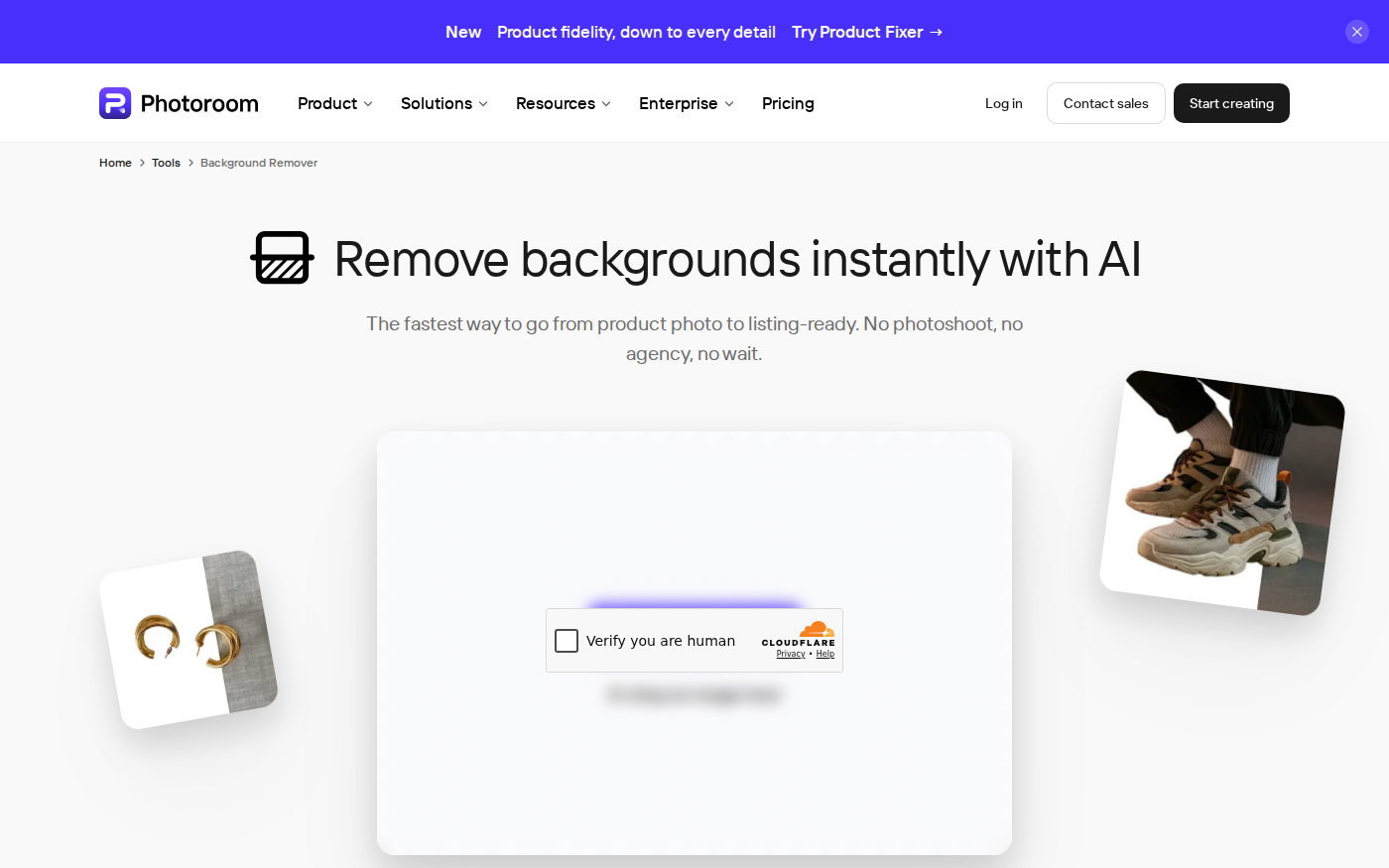
PhotoRoom vs Pixlr: Which Is Better for Product Photos?
Last checked: September 4, 2026 · Category: AI image tools PhotoRoom is the more direct choice for turning product photos into consistent marketplace images; Pixlr is the more flexible choice when…
CapCut vs Descript: Which Editor Fits Talking-Head Videos?
Last checked: August 28, 2026 · Category: AI video tools CapCut and Descript can both turn a talking-head recording into a captioned video, but they make different parts of the edit feel primary.…