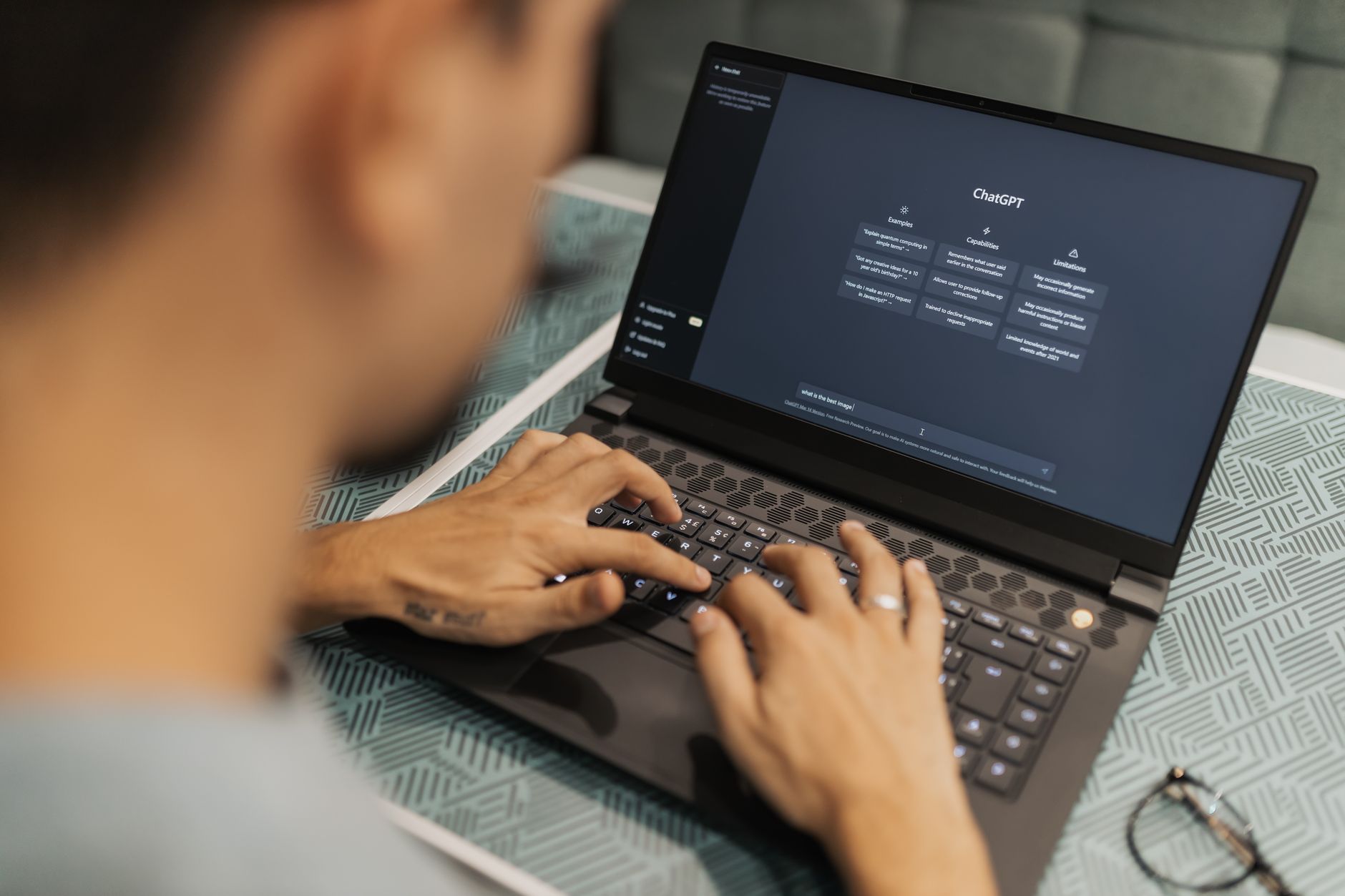
Best AI Text Generation Tools for Product and Operations Teams in 2026: ChatGPT, Claude, Gemini, DeepSeek, Mistral, Ollama, and LM Studio
Last updated: 2026-06-19 · Category cluster: Text Generation
AI text generation has become too important to treat as a personal productivity toy. In 2026, product managers use models to turn rough notes into specs, support teams draft help-center answers, operations teams summarize policies, analysts ask questions across long documents, and founders ask for everything from sales emails to hiring scorecards. The speed is real. The mess is real too. If every team member chooses a different chatbot, pastes sensitive documents into unknown accounts, and stores useful prompts in private notes, the company does not gain an AI system. It gains invisible process risk.
This guide is for product, operations, support, marketing, HR, finance, and founder-led teams that want practical text-generation tools without losing control of their data or voice. The main options are not interchangeable. ChatGPT is the broad daily assistant and Custom GPT workspace. Claude AI is especially strong for long documents, careful rewriting, and policy-heavy work. Gemini fits teams already living in Google Workspace. DeepSeek and Mistral matter when cost, open models, and reasoning tests are part of the conversation. Ollama and LM Studio bring text generation onto local machines. The full category lives in the findaiverse Text Generation tools hub.
The wrong question is “which model is smartest?” The useful question is “which text job are we trying to make safer, faster, and easier to review?” Drafting an email, analyzing a 90-page policy, answering internal IT questions, running a support bot, and experimenting with a local model all need different controls. Teams that split those jobs make better choices and spend less money.
- Choose by job, not leaderboard — Daily drafting, long-document review, workspace integration, open-model testing, and local privacy workflows each call for different tools.
- Keep source material visible — AI text is useful only when reviewers can see the document, customer note, policy, or data point behind the answer.
- Local models solve some privacy problems — Ollama and LM Studio keep prompts on your machine, but teams still need hardware, model choice, and quality checks.
- Roll out with evaluation sets — Test models on real tasks from your team before you buy seats or declare a company standard.
Why AI text generation is now an operating decision
A text generator used to sit at the edge of work. Someone opened a chat window, asked for a blog outline, copied a few lines, and moved on. That was harmless enough. Now the same class of tool touches product requirements, customer complaints, legal policies, internal knowledge bases, spreadsheets, interview feedback, code comments, sales follow-ups, and board updates. Text is the connective tissue of the company. Once AI starts writing and summarizing that text, the tool choice becomes an operating decision.
The first risk is drift. A support lead may use ChatGPT for macros, an HR manager may use Claude for policy rewrites, a marketer may use Gemini inside Docs, and an engineer may run Mistral locally. None of those choices is wrong. The problem appears when the company has no shared rule for what may be pasted, which outputs need review, where prompts are stored, and which answers can be reused with customers. AI makes writing faster, so bad process also spreads faster.
The second risk is false confidence. Text generation feels polished even when it is thin. A model can produce a neat comparison table with no evidence. It can summarize a document while missing a footnote. It can rewrite a customer promise in language that legal would not approve. It can invent an integration, date, or metric. That is why text-generation workflows need review gates. A spell checker can be treated lightly. A model that drafts public-facing claims cannot.
The upside is still large. The right setup reduces blank-page time, finds patterns in long notes, helps non-native writers communicate clearly, turns meeting transcripts into usable summaries, and lets small teams build internal assistants without hiring a full AI platform group. The Text Generation hub on findaiverse should be read as a workflow map, not a beauty contest. Start with the recurring text bottleneck and work backward.
The seven text-generation jobs teams should split
The first job is daily drafting and editing. This includes emails, internal memos, product one-pagers, meeting summaries, interview notes, sales replies, and short content drafts. ChatGPT, Claude AI, and Gemini all work here. The best choice often depends on where the team already writes. If people live in Google Docs and Gmail, Gemini has a natural advantage. If they need long-form editing and careful tone work, Claude is often pleasant to work with. If they want broad plugins, Custom GPTs, file analysis, and a large ecosystem, ChatGPT is hard to ignore.
The second job is long-document analysis. Contracts, policies, research packets, customer call collections, product specs, RFPs, and manuals need context handling and patient reading. Claude AI is a strong candidate because long context is part of its identity. Gemini is also useful when the material lives in Google files. ChatGPT can work well when files are clean and the task is clear. The evaluation should not be “did the summary sound good?” It should be “did it preserve exceptions, dates, obligations, and unresolved questions?”
The third job is workspace-native assistance. A model inside email, documents, spreadsheets, and calendars can save time because the user does not have to move context manually. Gemini belongs in this lane for Google-heavy teams. ChatGPT and Claude can still help, but copy-paste friction changes behavior. If the company wants broad adoption, the easiest tool often wins more daily use than the tool that wins a benchmark.
The fourth job is reasoning and cost-sensitive experimentation. DeepSeek and Mistral give teams another route when they want capable models, open options, or better cost control. They are especially interesting for teams building prototypes, evaluating open-weight models, or creating workflows where the economics of high-volume generation matter. Do not assume a cheaper model is worse. Test it against your own prompts, support questions, and policy drafts.
The fifth job is local privacy work. Ollama and LM Studio help run models on your own machine. This can be useful for sensitive notes, private research, early legal drafts, product strategy, or data that should not go to a cloud assistant. Local does not automatically mean better. It means you control where the prompt goes. You still need the right model, enough hardware, and a human check on outputs.
The sixth job is internal assistants and workflows. Dify and Coze are not pure text generators, but they matter because text generation becomes more useful when connected to a knowledge base, API, or workflow. A support bot, onboarding assistant, policy Q&A tool, or sales enablement helper needs retrieval, access control, and logging. A standalone chatbot is usually not enough.
The seventh job is model and prompt management. Once several teams use AI, prompts become assets. Approved prompts, bad examples, evaluation cases, tone rules, data boundaries, and output checklists should live somewhere. This is not glamorous work, but it is where teams stop repeating mistakes. A strong prompt library beats a scattered folder of personal shortcuts.

ChatGPT, Claude, Gemini, DeepSeek, Mistral, Ollama, and LM Studio compared
| Need | Best starting tools | Use it for | Watch out for |
|---|---|---|---|
| Broad daily assistant | ChatGPT | Drafting, brainstorming, files, Custom GPTs, team prompts. | Workspace policy and review rules still matter. |
| Long documents and careful language | Claude AI | Policies, specs, contracts, research packets, editing. | Summaries need spot checks against source pages. |
| Google Workspace workflows | Gemini | Docs, Gmail, Sheets, Slides, Drive-connected work. | Convenience can hide weak review habits. |
| Open-model and cost tests | DeepSeek, Mistral | Reasoning tests, developer experiments, high-volume drafts. | Run your own evaluation before standardizing. |
| Local private generation | Ollama, LM Studio | Offline drafts, private notes, local prototypes, model comparison. | Hardware limits, model quality, and updates are your job. |
| Internal AI apps | Dify, Coze | Knowledge bots, RAG workflows, support assistants, form-to-draft flows. | Access rights and source freshness need governance. |
The comparison looks simple on paper, but the tradeoffs are not only technical. A model that writes better prose may be less convenient for a team that spends all day in Google Docs. A local model may satisfy privacy needs while frustrating users with slower responses. A cheaper API may be perfect for low-risk drafts and poor for high-stakes policy interpretation. The best test is a real work sample.
Create a small evaluation set before buying more seats. Include one customer email, one policy excerpt, one messy meeting transcript, one spreadsheet explanation, one product spec, one support macro, one sensitive draft that must stay local, and one prompt that has failed in the past. Ask each tool to complete the same tasks. Score outputs on accuracy, source awareness, tone, time saved, edit burden, privacy fit, and adoption friction. That test will teach more than a week of reading model rankings.
It also helps to separate “assistant quality” from “system quality.” A great model inside a weak company process can produce risky work. A slightly weaker model inside a clear workflow can create dependable output. For business use, the workflow usually wins.
A practical rollout workflow from policy to production
Start with a data boundary. Write a short rule that explains what employees may paste into cloud AI tools, what needs an approved enterprise account, and what must stay local or outside AI entirely. Keep it readable. People will not follow a 20-page AI policy for everyday drafting. A simple traffic-light model works: public material is green, internal non-sensitive material is yellow, customer or employee personal data is red unless approved, and regulated or legal material needs special handling.
Next, name the official use cases. Do not begin with “everyone can use AI for everything.” Begin with five or six safe, valuable workflows: summarize public articles, draft internal meeting notes, rewrite customer-neutral emails, create first-pass specs from approved notes, generate FAQ drafts from published help docs, and translate low-risk internal copy. Once those work, expand.
Then choose tools by lane. A company may standardize ChatGPT or Claude for general use, Gemini for Workspace users, Ollama or LM Studio for private local experiments, and Dify for one internal assistant. That is fine. The point is not to force a single tool. The point is to prevent unmanaged sprawl. Each lane should have an owner, examples, allowed data, and review expectations.
Build prompt templates around real work. A good template includes the role, source material, output format, forbidden claims, tone, and review reminders. For example: “Use only the pasted policy text. List obligations, exceptions, dates, and open questions. Do not infer missing rules. Mark uncertain items.” That prompt is boring. Boring is good. It reduces imagination where imagination would cause trouble.
Before scaling, run a two-week pilot. Ask 10 to 20 users to log the task, tool, time saved, edit time, errors found, and whether they would use it again. Review the mistakes. If outputs are too generic, improve source packs. If users paste risky data, fix the policy and UI access. If adoption is low, the tool may not fit where people work. A rollout should change based on evidence, not excitement.

Quality checks, privacy rules, and source control
Quality control starts with a simple habit: separate generation from approval. AI can draft the memo, but a person approves the claim. AI can summarize the policy, but a person checks the source. AI can rewrite the email, but the sender owns the promise. This sounds obvious until a polished output moves straight into a customer ticket or public page. Make the approval owner visible.
For text-generation work, the most common failures are missing caveats, invented specifics, overconfident comparisons, tone mismatch, stale product information, and hidden data exposure. Build checks for those. A support macro should be compared against the current help article. A sales email should be checked against pricing and legal language. A policy summary should cite the relevant paragraph. A local-model output should still be reviewed for accuracy.
Privacy is not just about model providers. It is also about user habits, browser extensions, shared accounts, logging, exports, screenshots, and copied output. If a team uses cloud tools, use managed accounts and vendor settings. If a team uses local tools, document where models are downloaded from, which model versions are approved, and how outputs are stored. Local AI is not a free pass for careless data handling.
For higher-risk work, borrow ideas from practical AI risk resources such as the NIST AI Risk Management Framework and the OWASP Top 10 for LLM Applications. You do not need a formal committee for every draft, but you do need a shared language for hallucination, prompt injection, data leakage, access control, and evaluation.
Source control matters too. Store approved prompts, source packs, sample outputs, evaluation sets, and final documents. If a prompt generated a good customer response, save the reviewed version, not just the first draft. If a model missed an exception, add that case to the evaluation set. The system improves when mistakes become test cases.
Recommended stacks for product, operations, support, and privacy-first teams
A product team should start with ChatGPT or Claude for specs, release notes, feedback synthesis, and first-pass user stories. Add Gemini if the product organization lives in Google Docs. Use DeepSeek or Mistral for model comparison if engineering wants to test open options. Keep final product claims in a source-of-truth doc, and make sure release notes are checked against shipped features. Product text is not only writing; it is a promise about the product.
An operations team should focus on policies, SOPs, meeting notes, vendor comparisons, and internal checklists. Claude is useful for long policy documents. ChatGPT is useful for templates and broad drafting. Gemini is useful for Docs and Sheets workflows. Dify can become useful once the team wants an internal policy assistant. Do not build a bot until the documents are current. AI cannot fix a messy policy folder.
A support team should begin with source-grounded drafts. Use approved help articles, known issue notes, and escalation rules as the input. ChatGPT, Claude, or Gemini can create macro drafts, but each macro needs review by support leads and product owners. If the team wants a customer-facing bot, use a workflow platform with retrieval, logging, and handoff rules. A model that sounds friendly but gives wrong instructions will create more tickets, not fewer.
A privacy-first team should test Ollama and LM Studio early. They are good for local drafts, sensitive notes, and model exploration without cloud uploads. Pick one or two approved local models, write a setup guide, and test them on representative tasks. Users should know the limits: a local model may be slower, less polished, or weaker on current facts. It is a privacy tool, not automatically the best writer.
A founder-led small team should avoid overbuilding. Pick one general assistant, one place to store prompts, one data rule, and one review routine. The findaiverse AI tools directory can help compare adjacent categories, but do not subscribe to everything. Text generation works best when the team changes a few recurring habits: better briefs, clearer source packs, shorter review loops, and saved examples.

Field notes from findaiverse curation
After reviewing text-generation tools for findaiverse, the strongest pattern is that teams keep the tools that sit close to their documents. A brilliant assistant that requires constant copy-paste may lose to a slightly weaker assistant inside the workspace. Convenience drives habits. That is why Gemini matters in Google-heavy teams, why ChatGPT remains a broad default, and why Claude keeps fans among people who live in long documents.
The second pattern is that local AI is moving from hobbyist curiosity to serious workflow option. Ollama and LM Studio are not only for developers anymore. A privacy-aware analyst, lawyer, researcher, or founder can run useful drafts locally. The barrier is still model choice and setup confidence. A simple internal guide can make the difference between “interesting demo” and “daily private assistant.”
The third pattern is that evaluation is underrated. Teams argue about which model is best before they have defined what “best” means. Your best model for support macros may not be your best model for policy summaries. Your best cloud assistant may not be allowed for the most sensitive work. A 20-task evaluation set, updated after mistakes, is more valuable than a Slack debate about benchmarks.
Disclosure: findaiverse lists free and paid AI tools. This article is editorial guidance, not a paid placement. Pricing, model behavior, training-data settings, enterprise controls, and local model availability change often. Before a company-wide rollout, check each vendor’s current terms and run your own tasks through the tools. Start with the findaiverse Text Generation hub, then compare adjacent workflow tools only when the text lane is clear.
FAQ
What are AI text generation tools?
AI text generation tools are software products that create, rewrite, summarize, translate, classify, or analyze written language with large language models. They can draft emails, summarize documents, answer questions, create support macros, write internal notes, and help build knowledge assistants. Good results depend on clear source material, data rules, and human review.
Which AI text generation tool should a team try first?
For broad daily work, start with ChatGPT, Claude AI, or Gemini. Choose Gemini if Google Workspace integration is the main need, Claude if long documents and careful editing matter, and ChatGPT if you want a broad assistant ecosystem. If privacy is the priority, test Ollama or LM Studio with approved local models.
Are local LLM tools safer than cloud AI tools?
Local tools such as Ollama and LM Studio keep prompts and outputs on your own machine, which can reduce data exposure. They are not automatically safer in every way. Teams still need approved models, update practices, access rules, output review, and secure storage. Privacy improves only when the whole workflow is controlled.
How do we prevent hallucinations in AI-generated text?
Use source-grounded prompts, ask the model to mark uncertainty, require citations or paragraph references for high-risk summaries, compare outputs against the original document, and keep an evaluation set of past mistakes. Do not let polished writing bypass review. The reviewer owns the claim, not the model.
Final recommendation
Pick an AI text-generation stack by workflow, not by hype. Name the jobs, choose one or two official assistants, test local tools for sensitive work, store approved prompts, and review outputs where claims matter. If a tool makes drafts faster but increases correction time, it has not helped yet. Start with the Text Generation tools hub on findaiverse and build a small, repeatable system before expanding seats.