
LM Studio
LM Studio is a free desktop application that lets you discover, download, and run powerful open-source LLMs locally on your Mac, Windows, or Linux machine — no cloud, no terminal, no API keys required.
LM Studio is a beautifully designed desktop application that brings the power of local large language models to everyone — not just developers. With its intuitive graphical interface, you can browse and download hundreds of open-source models directly from Hugging Face, including Llama 3, Mistral, Phi-3, Gemma, Qwen, and many more, all within a few clicks and without ever opening a terminal.
Privacy is at the heart of LM Studio. Every prompt you type and every response you receive stays entirely on your own hardware. Nothing is sent to external servers, meaning your conversations, documents, and sensitive data never leave your machine. This makes LM Studio ideal for professionals working with confidential information — lawyers, doctors, researchers, and enterprises that require strict data governance.
One of LM Studio's standout features is its hardware-aware optimization. The app automatically detects your GPU and CPU configuration, recommends models that will run efficiently on your hardware, and applies quantization settings (such as GGUF Q4, Q5, Q8) to balance performance and quality. Whether you have an NVIDIA GPU, an Apple Silicon Mac, or only a CPU, LM Studio finds the best fit for your system.
Beyond the chat interface, LM Studio includes a built-in local inference server that is fully compatible with the OpenAI API. This means any application or script that works with OpenAI's API can be pointed at your local LM Studio server instead, enabling zero-cost local AI integration for development, prototyping, and testing without spending a single token on cloud inference.
LM Studio also provides a developer-friendly model management system, allowing you to load multiple models, switch between them instantly, and compare their outputs side by side. The application supports system prompt customization, temperature and parameter tuning, and context length configuration, giving power users fine-grained control over model behavior without requiring command-line expertise.
Key Features
- Discover and download hundreds of open-source LLMs from Hugging Face directly in the app — no terminal required
- Built-in chat interface with system prompt customization, temperature control, and context length settings
- OpenAI-compatible local API server — connect any existing app or script to your local model instantly
- Automatic hardware detection recommends the best model and quantization level for your GPU or CPU
- Supports GGUF quantized models (Q4, Q5, Q8) for optimal performance on consumer hardware
- Full offline operation — all inference runs locally with zero data sent to external servers
- Multi-model management — load, switch, and compare multiple models side by side
- Cross-platform support for macOS (Apple Silicon and Intel), Windows, and Linux
- Privacy-first design ideal for sensitive professional use cases such as legal, medical, and enterprise
- Regular model library updates with support for the latest open-source models including Llama 3, Mistral, and Phi-3
Frequently Asked Questions
Is LM Studio completely free to use?
Yes, LM Studio is free for personal use. You can download the application, browse the model library, run local LLMs, and use the local API server at no cost. There is no subscription or usage limit for personal use. Commercial licensing terms may apply for business deployments — check the official website for the latest licensing information.
What hardware do I need to run LM Studio?
LM Studio runs on any modern Mac, Windows PC, or Linux machine. For best performance, a dedicated GPU (NVIDIA with 6GB+ VRAM or Apple Silicon with unified memory) is recommended. However, many smaller quantized models (Q4 GGUF) can run on CPU-only systems with 8GB+ RAM, albeit more slowly. LM Studio automatically recommends models that match your hardware capabilities.
How is LM Studio different from using ChatGPT or Claude?
The key difference is that LM Studio runs entirely on your own device with no internet connection required after downloading the model. Your data never leaves your machine, making it ideal for privacy-sensitive use cases. You also have full control over which model you use and how it behaves, with no usage fees, rate limits, or API costs. The trade-off is that local models may be less capable than the latest cloud models like GPT-4o.
Which AI models can I run in LM Studio?
LM Studio supports any model available in GGUF format on Hugging Face. Popular options include Meta's Llama 3, Mistral and Mixtral, Microsoft's Phi-3, Google's Gemma, Alibaba's Qwen, and many community fine-tunes. The in-app model browser makes it easy to search, filter by size and capability, and download models directly without leaving the application.
Can I use LM Studio to build AI-powered applications?
Yes. LM Studio includes a built-in local server that exposes an OpenAI-compatible REST API. Any application, script, or tool that works with OpenAI's API can be redirected to your local LM Studio server by simply changing the base URL to http://localhost:1234/v1. This makes LM Studio an excellent zero-cost backend for AI app development and prototyping.
Alternative Tools
Other Text Generation tools you might like

Alan AI
Text GenerationAlan AI is KT's AI assistant for Korean users, offering general-purpose conversational AI with Korean language optimization, voice and text interaction, and integration with KT's telecom services.

Anyword
Text GenerationData-driven AI copywriting with predictive performance scores for marketing

Character.ai
Text GenerationCharacter.ai is an AI conversation platform where you can chat with fictional characters, historical figures, and custom AI personas created by millions of users worldwide.

ChatGPT
Text GenerationChatGPT is OpenAI's conversational AI assistant built on GPT-4, capable of writing, coding, analysis, and creative tasks across virtually any domain.

Claude AI
Text GenerationClaude is Anthropic's AI assistant built on Constitutional AI principles, emphasizing safety, honesty, and nuanced reasoning for writing, coding, analysis, and research.

CLOVA X
Text GenerationCLOVA X is Naver's AI chatbot powered by HyperCLOVA X, offering deep Korean language understanding and seamless integration with Naver's search, shopping, and map services.
Tags
Related Guides
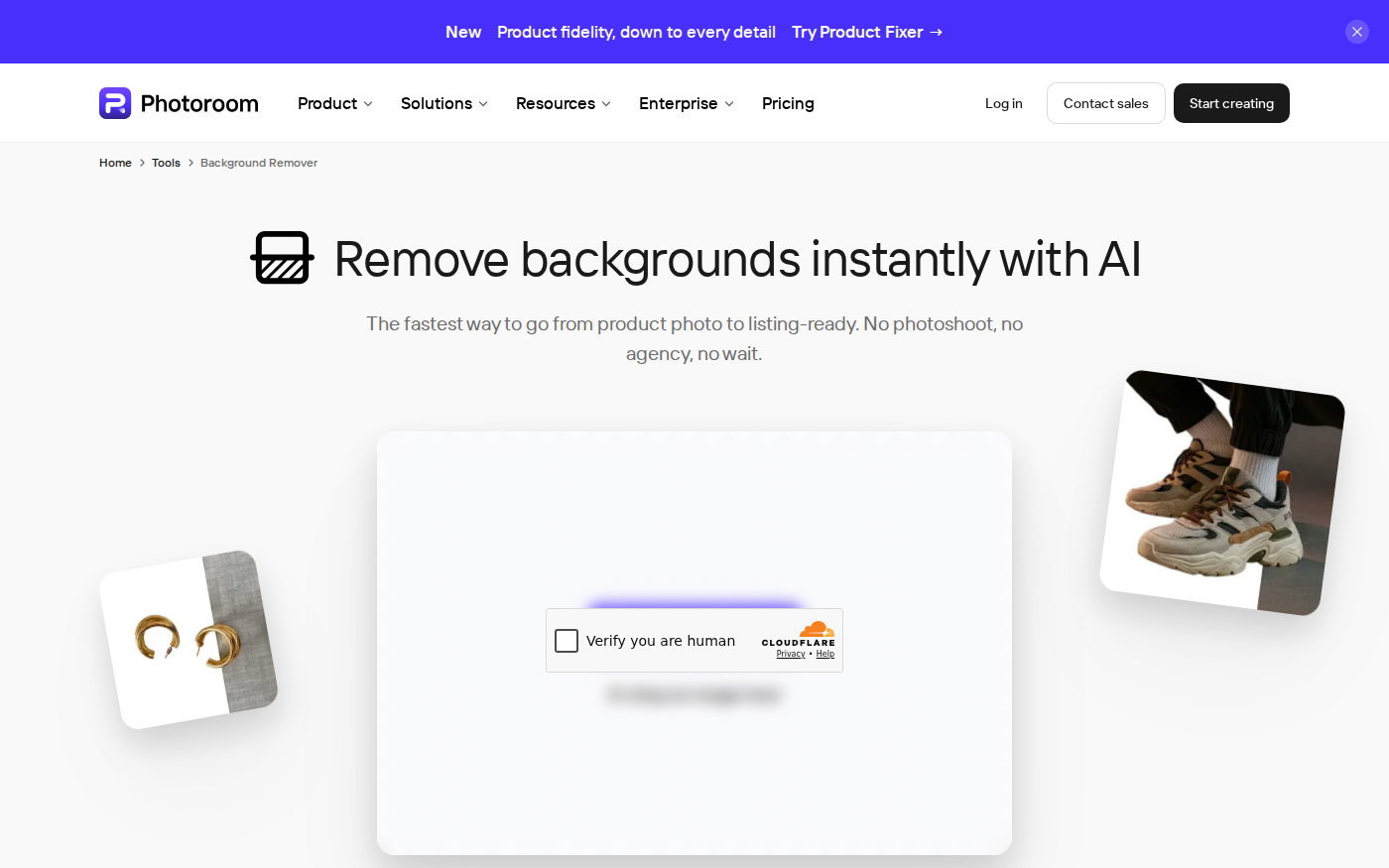
PhotoRoom vs Pixlr: Which Is Better for Product Photos?
Last checked: September 4, 2026 · Category: AI image tools PhotoRoom is the more direct choice for turning product photos into consistent marketplace images; Pixlr is the more flexible choice when…
CapCut vs Descript: Which Editor Fits Talking-Head Videos?
Last checked: August 28, 2026 · Category: AI video tools CapCut and Descript can both turn a talking-head recording into a captioned video, but they make different parts of the edit feel primary.…
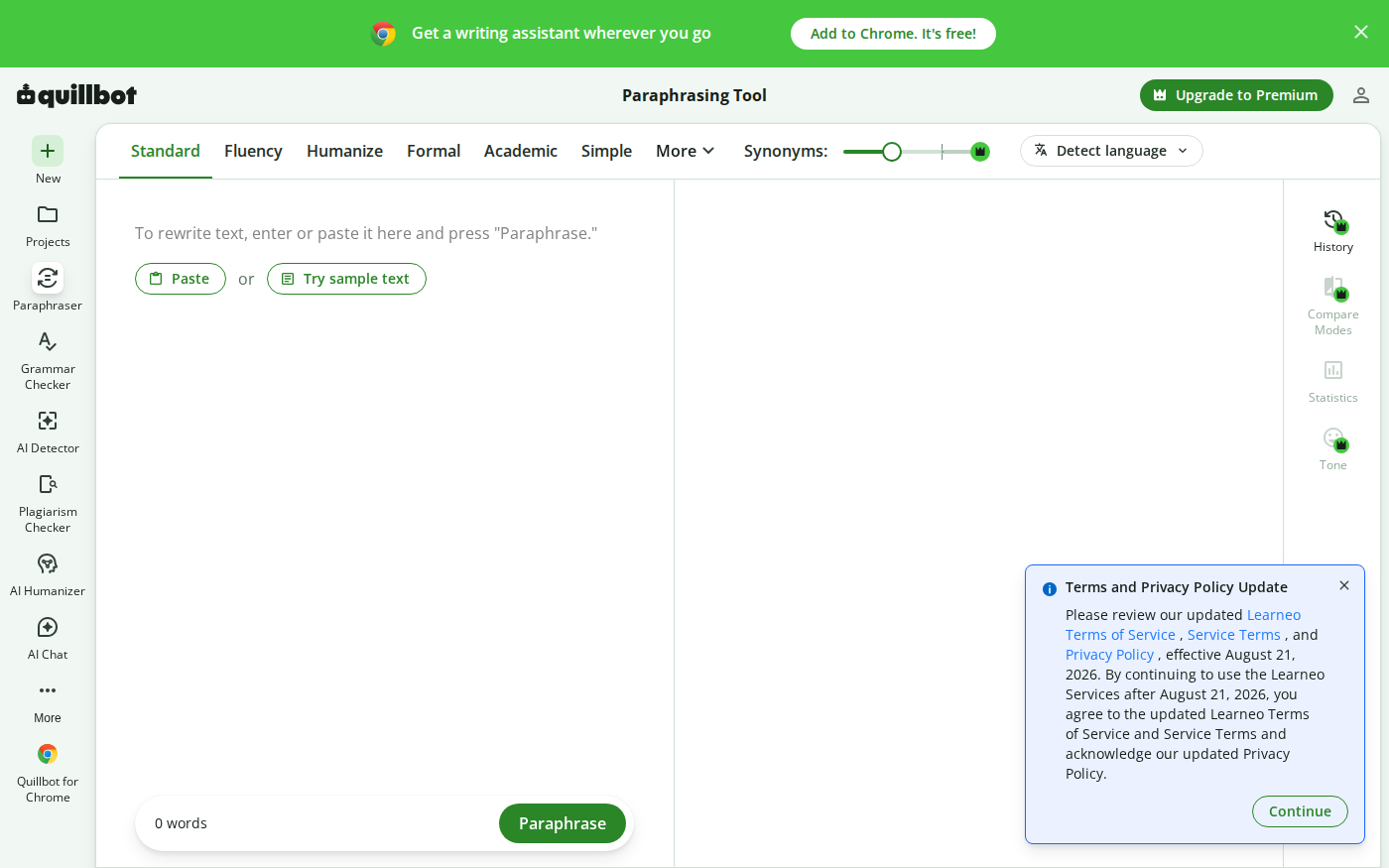
Wordtune vs QuillBot: Which Rewriter Gives You More for Free?
Last checked: August 21, 2026 · Category: AI text-generation tools Wordtune and QuillBot can both rewrite an awkward sentence, but their free plans place the limit in different places.…
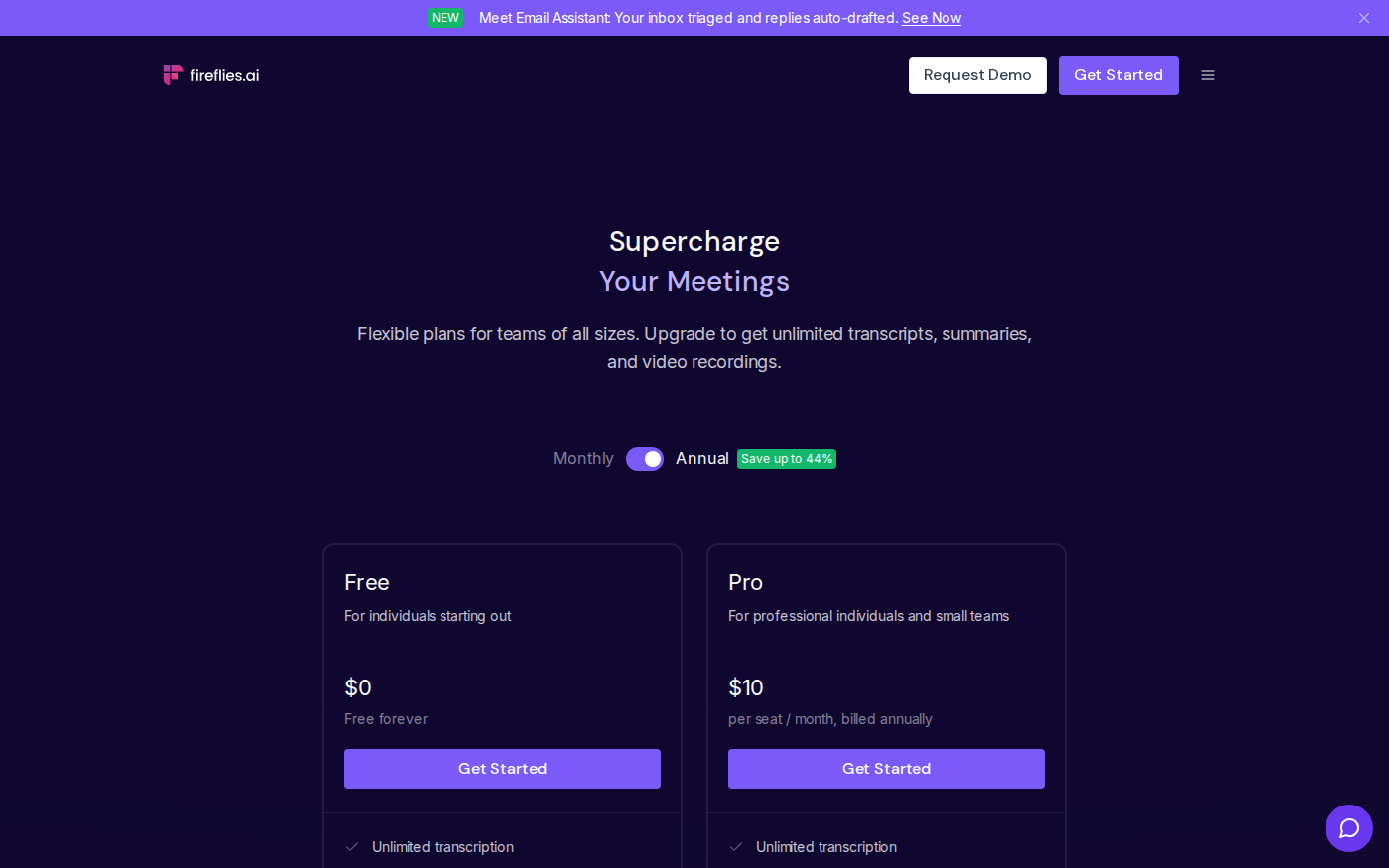
Otter vs Fireflies: Which Meeting Assistant Fits Your Team?
Last checked: August 14, 2026 · Category: AI productivity tools Otter and Fireflies solve the same basic problem, but their pricing meters and strongest use cases are different.…